
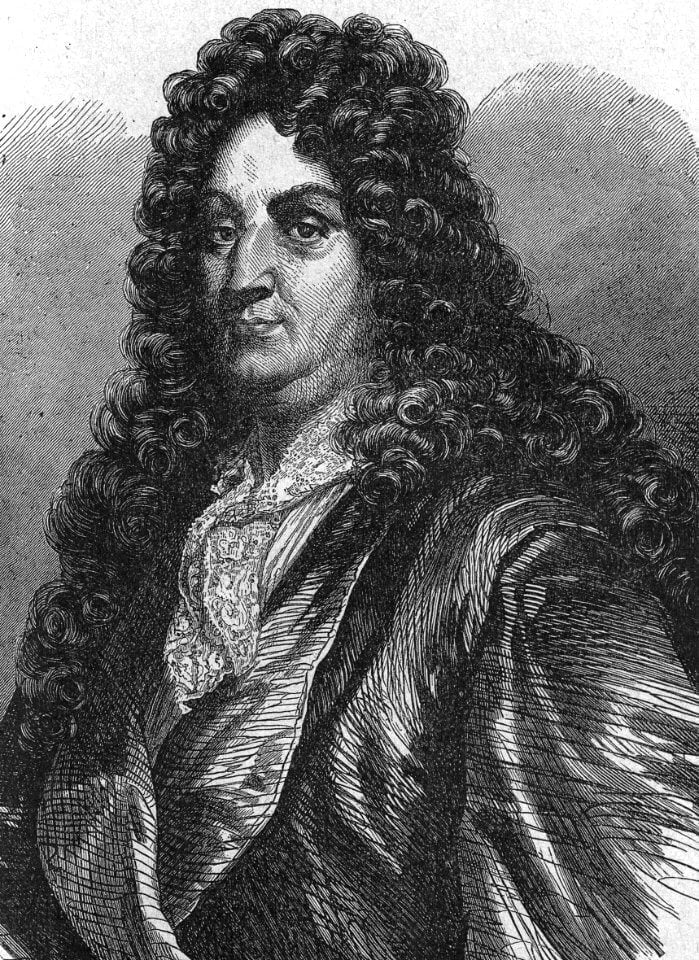
The Hidden Lovers
In the style of JEAN RACINE
"The protection of privacy echoes Racine's tragedies, where characters hide secrets, where intrigues are woven in the shadows. As in "Phèdre," where the heroine tries to hide her all-consuming passions, we seek to preserve our intimacy, to avoid the dire repercussions of hasty revelations."
At the heart of the French royal court, where political intrigues mingled with romantic passions, stood a man named Edward. Edward was a noble spirit, a lover of words and verse, who understood the importance of preserving privacy in a world where secrets were eagerly sought.
In an era where prying eyes were commonplace, Edward resolutely kept his distance. He had learned from an early age that privacy was a treasure to be jealously guarded, a sacred intimacy that gave meaning to his existence.
Edward was a renowned poet at court, where his talented pen enchanted ladies and lords alike. But behind his elegant words and captivating sonnets, he concealed profound thoughts about the protection of privacy.
One day, while strolling through the palace's sumptuous gardens, Edward caught sight of a young woman of unparalleled beauty, Elise. She was the brightest rose among the flowers, but her gaze betrayed a secret melancholy.
Édouard and Élise shared furtive glances and shy smiles, both understanding the importance of preserving their privacy in this world where appearances reigned supreme. They began to exchange confidential letters, words written with the ink of the heart, in which they expressed their deepest thoughts.
In this secret correspondence, Edward and Elise shared their thoughts on life, love, and the need for privacy. They knew that it was in this secret corner of the soul that they could truly be themselves, away from prying eyes.
But their love and their quest for privacy were not without obstacles. Powerful forces at court, jealous of their privacy and eager to know everything, sought to keep them apart. Malicious rumors spread, plots were hatched.
Edward and Elise realized that their love and freedom were inseparable. They decided to withdraw from court and take refuge in a remote estate where they could preserve their privacy and live out their love in peace.
There they found a haven of peace, a place where the murmurs of courtiers were replaced by the song of birds and the whisper of the wind. They built a simple and harmonious existence, nourished by the certainty that privacy was a fundamental right of every human being.
For years, Edward and Elise lived in the shadows of society, but their love never wavered. They knew that their withdrawal was not an escape, but an affirmation of their freedom and their right to exist outside of scrutiny.
Their example began to inspire others seeking freedom and privacy. People from all walks of life joined them, forming a community where privacy was respected and cherished.
Edward wrote plays and poems that celebrated privacy, individual freedom, and the power of solitude. His words touched the hearts of those oppressed by society and inspired them to fight to preserve their integrity.
Elise, for her part, was the guardian of the community. She ensured that everyone's secrets were protected, that everyone could flourish in the safety of their own privacy.
But their refuge remained vulnerable to attack from the outside world. The court tried to bring them back, to separate them, to silence them. The forces of society worked hard to shatter their love and stifle their quest for privacy.
But Edward and Elise remained firm, determined to defend what they believed to be right and essential. They knew that privacy was the lifeblood of the soul, and that everything must be done to preserve it, even at the risk of their own happiness.
And so they continued their struggle, hoping that their actions would inspire others to stand up for the protection of privacy. For they knew that even amid intrigue and plotting, love and freedom would always triumph.
 EN
EN  FR
FR  DE
DE  ES
ES  EL
EL  IT
IT  HR
HR  PT
PT  NL
NL  DE_AT
DE_AT  ET
ET  FI
FI  LV
LV  LT
LT  SK
SK  SL
SL