
Protecting personal data is essential to ensuring the security of your customers' and partners' sensitive information. In a digital environment where cyberattacks are increasingly common, understanding the steps to take in the event of a data breach is crucial to protecting your business and users, and complying with the legal requirements imposed by the GDPR. Viqtor® supports you in managing data breaches by offering a platform that complies with the GDPR and guiding you through each step, from identifying the breach to future prevention.
1. What to do in the event of a data breach?
In the event of a data breach, it is crucial to act quickly and in an organized manner to minimize risks. Here are the immediate actions to take:
Identify the nature and extent of the violation
- Assess the incident : Identify compromised data, such as personal information, passwords, or sensitive data.
- Determine the magnitude : estimate the number of people affected and the severity of the privacy breach.
Contain and limit the damage
- Isolate the source : If possible, disconnect compromised systems to prevent further spread.
- Secure data : Take steps to limit unauthorized access to affected data.
Informing internal stakeholders
- Inform your team : IT security, risk management and compliance managers must be informed quickly.
- Train your employees : make your team aware of the situation and the best practices to adopt to avoid making it worse.
2. Legal steps to follow in case of a data breach
The GDPR imposes strict obligations in the event of a personal data breach. Here are the main legal steps to follow:
Notify the data protection authority of the breach
- Notification period : under the GDPR, you must notify the competent authority (CNIL, for example) within 72 hours of becoming aware of the breach.
- Contents of the notification : provide information on the nature of the breach, the categories of data affected, the possible consequences and the measures taken to remedy it.
Inform the people concerned
- Notification to individuals : if the violation poses a high risk to the rights and freedoms of individuals, you must inform them without delay.
- Content of the information : explain the nature of the breach, the measures taken to contain it and the actions that affected individuals can take to protect themselves.
Analyze the causes and take corrective measures.
- Internal investigation : Identify the cause of the violation to prevent it from happening again.
- Corrective measures : implement actions to strengthen security and compliance in the future.
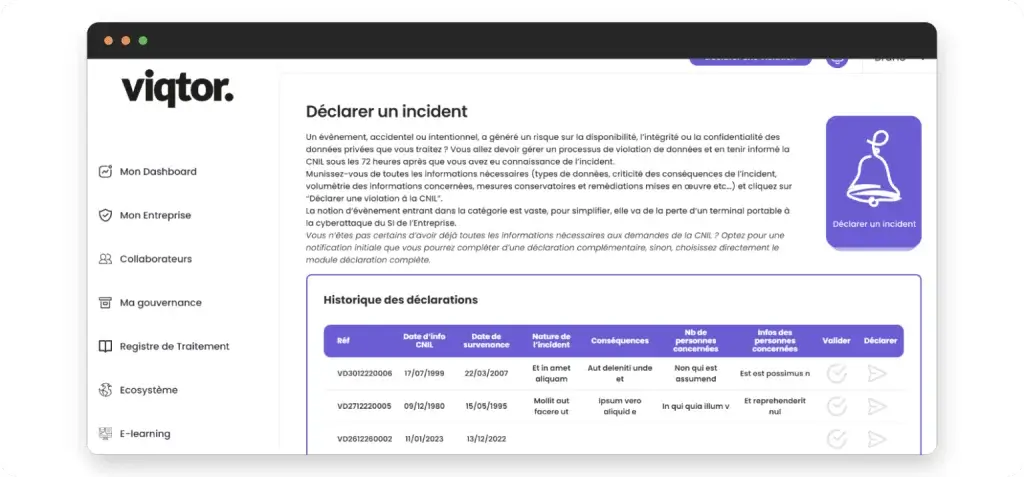

3. Crisis communication: How to manage the situation?
Communication management is essential to protect your company's image and maintain customer trust. Here's how to handle a data breach crisis:
Prepare a clear and transparent message
- Internal communication : make sure that all stakeholders within the company have a common vision of the situation.
- External communication : adapt the message according to the target audience (customers, partners, press), being transparent and providing useful information to resolve the crisis.
Ensure constant monitoring
- Update stakeholders : if the situation evolves, keep stakeholders informed regularly.
- Take feedback into account : Answer customer questions and concerns to build trust.
4. Future prevention: how to avoid data breaches?
Once the crisis is resolved, it is important to take steps to prevent future breaches. Here are some best practices:
Strengthen data security
- Systems Update : Ensure all software and systems are regularly updated to address vulnerabilities.
- Data encryption : Encrypt sensitive information to protect it from unauthorized access.
Train employees
- Security awareness : Organize training sessions for your employees on best practices in data security and the risks associated with breaches.
- Regular tests : Perform regular security tests to identify weaknesses in your systems.
Implement a violation management policy
- Action plan : Prepare a detailed action plan to quickly and effectively manage any future violations.
- Continuous monitoring : Implement monitoring mechanisms to detect data breaches at an early stage.
Management of data breaches is an essential component of the GDPR compliance. Thanks to Viqtor®, you can ensure that your business is ready to respond quickly and effectively to a data breach, while protecting user privacy and complying with legal requirements. Following the steps outlined in this guide will help you minimize the impact of a breach and strengthen the security of your systems for the future.
Download the complete guide for free:
 EN
EN  FR
FR  DE
DE  ES
ES  EL
EL  IT
IT  HR
HR  PT
PT  NL
NL  DE_AT
DE_AT  ET
ET  FI
FI  LV
LV  LT
LT  SK
SK  SL
SL